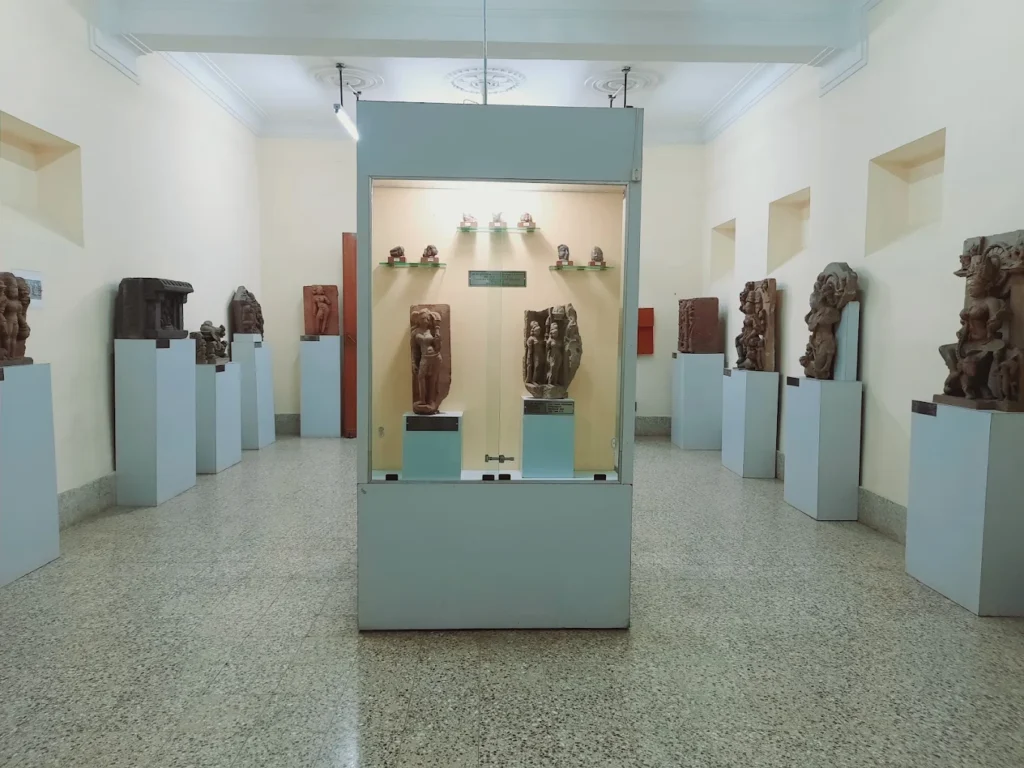

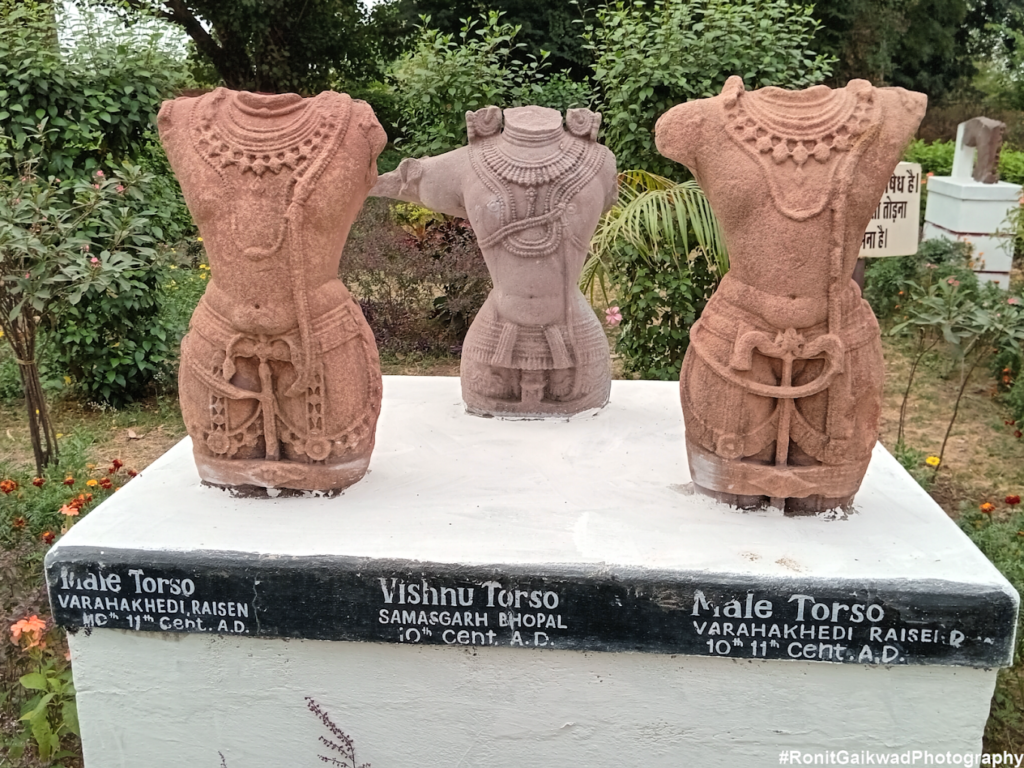
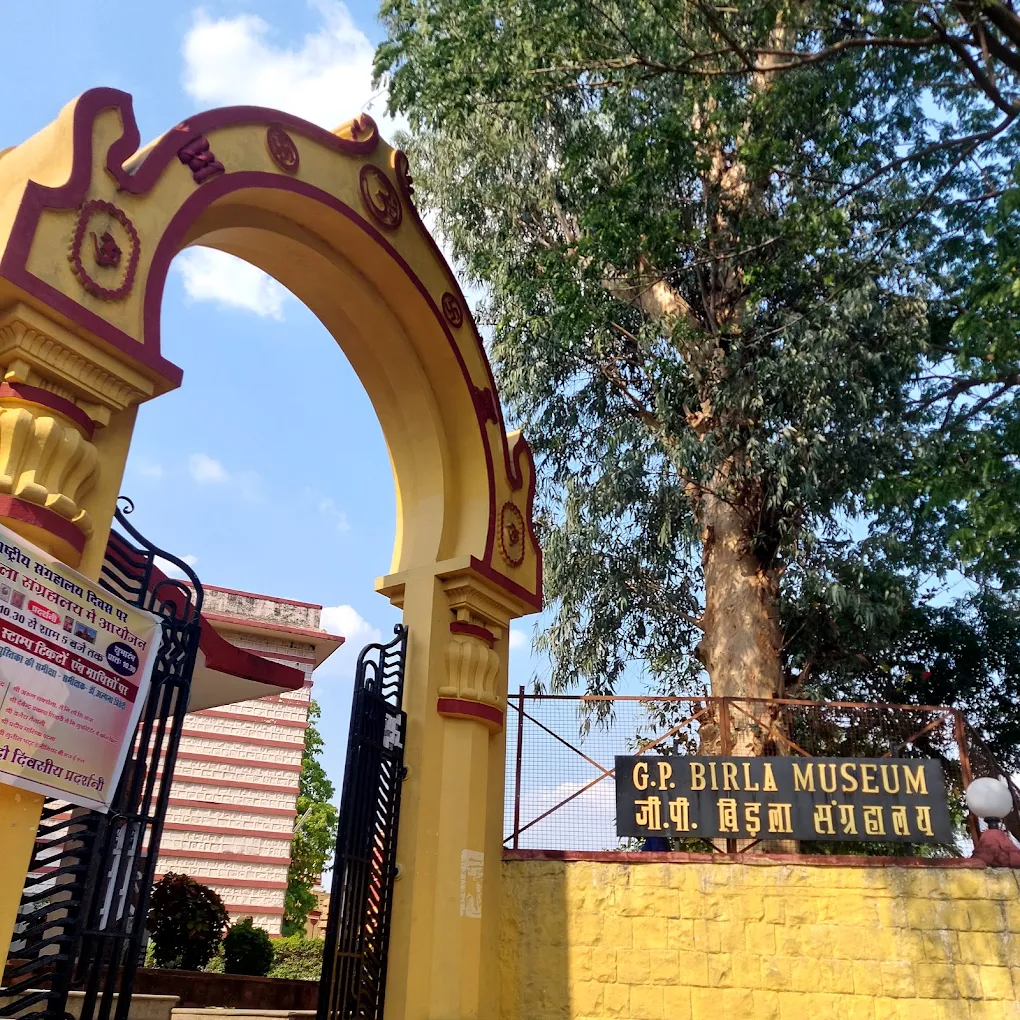
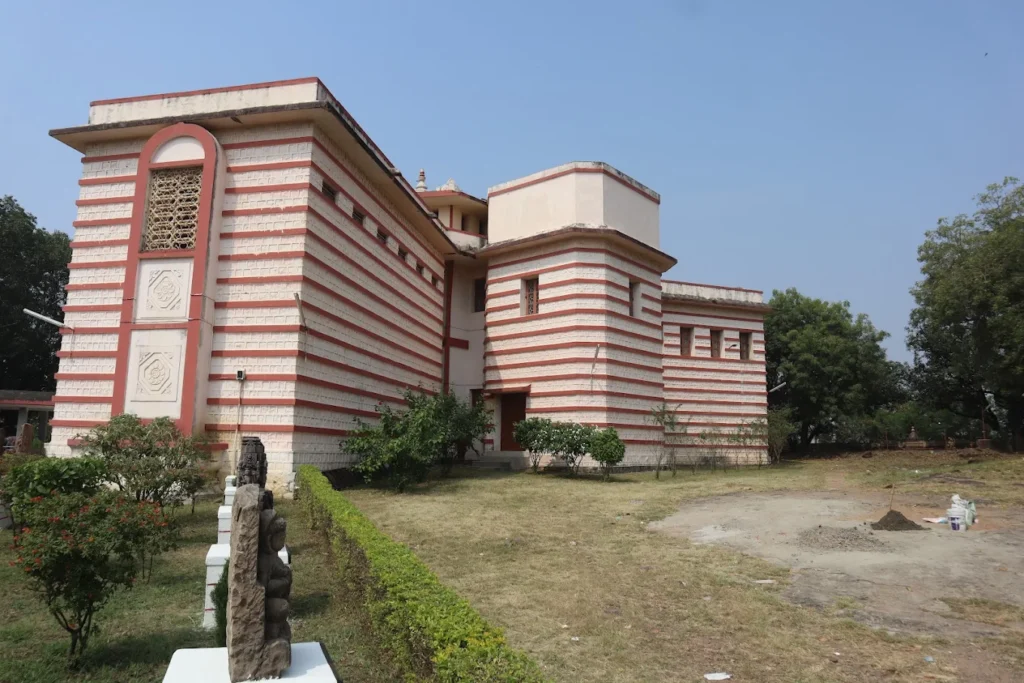
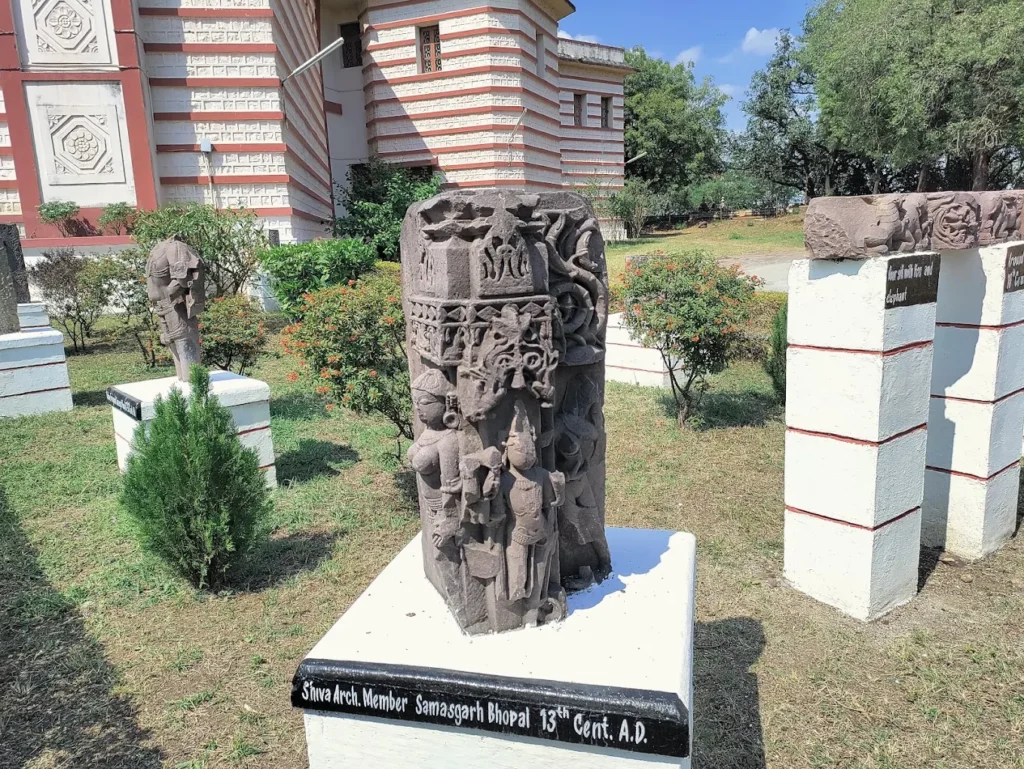
Birla Museum sits on the same hilltop campus as the Birla Mandir (Laxmi Narayan Temple) on Arera Hills, Bhopal, and was established in 1971 by the Birla family. Despite its small size, it holds a genuinely rich collection: stone sculptures, idols, manuscripts, coins, pottery, old locks, dolls and furnishings spanning roughly the 2nd century BC to the 13th century AD. Visitors are greeted from the entrance by sculptures dating to the 7th and 8th centuries, and the museum’s central hall branches into four or five sections, including one devoted to excavated Hindu deities more than 1,000 years old — depicting the Trinity of Brahma, Vishnu and Shiva alongside goddesses like Parvati, Lakshmi and Saraswati. Other highlights include Paleolithic and Neolithic tools, a large-scale replica of the Bhimbetka rock shelter, and notable 10th-century Ashapuri sculptures of a dancing Ganesh and Uma-Maheshwari. Each piece is typically displayed with an explanatory panel in English, making it accessible to a general visitor rather than only specialists.
