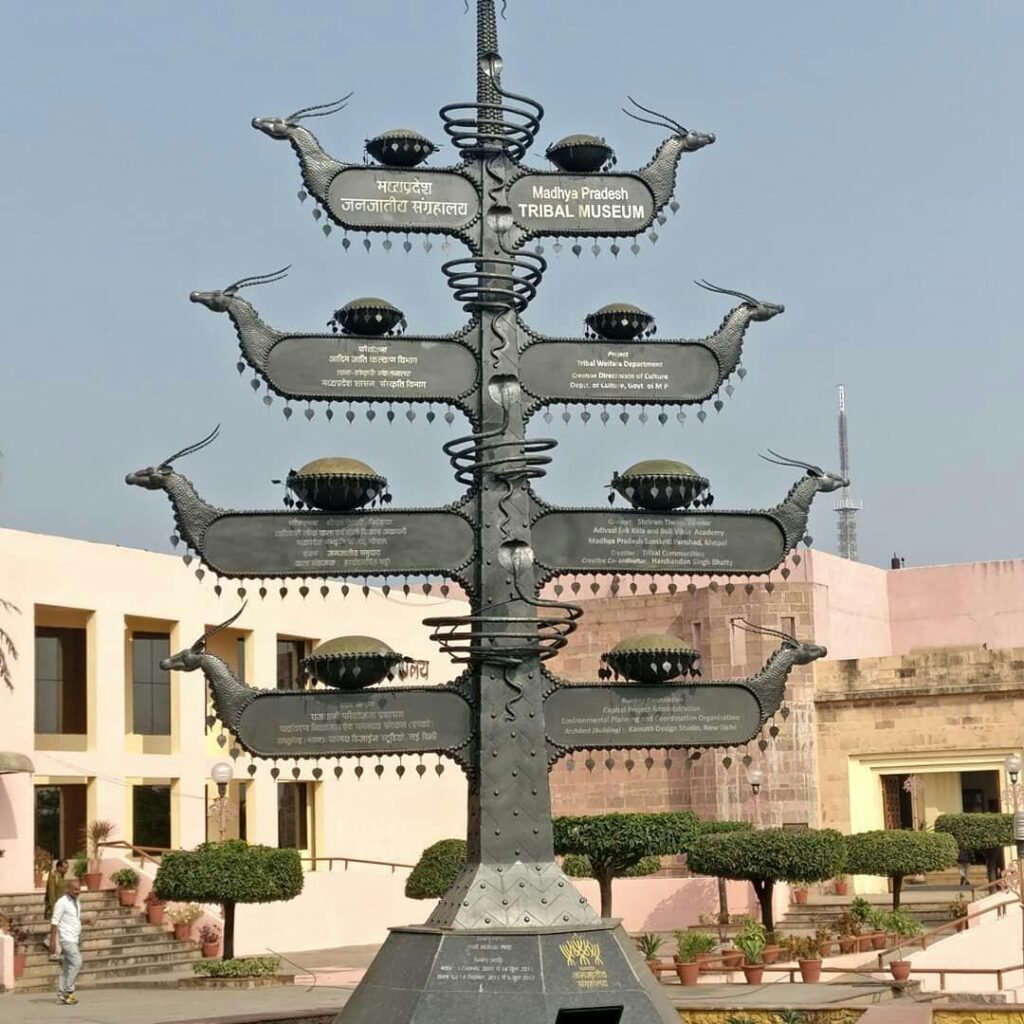

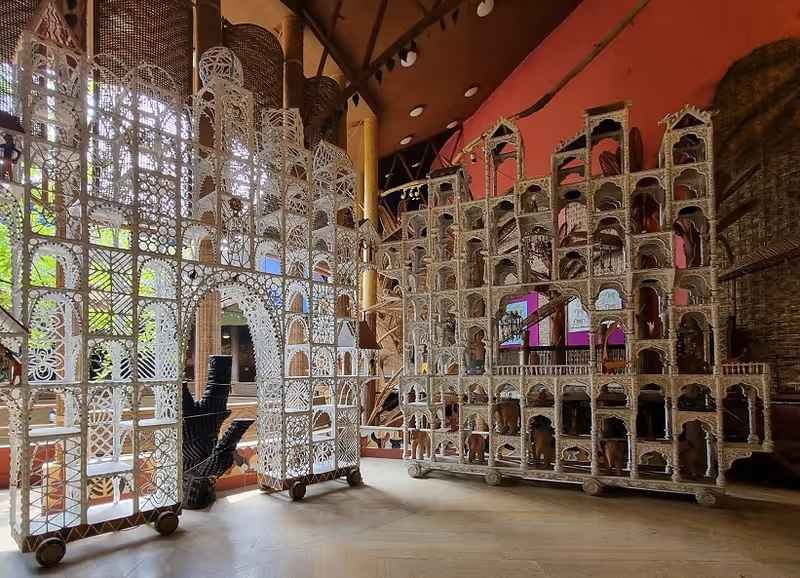
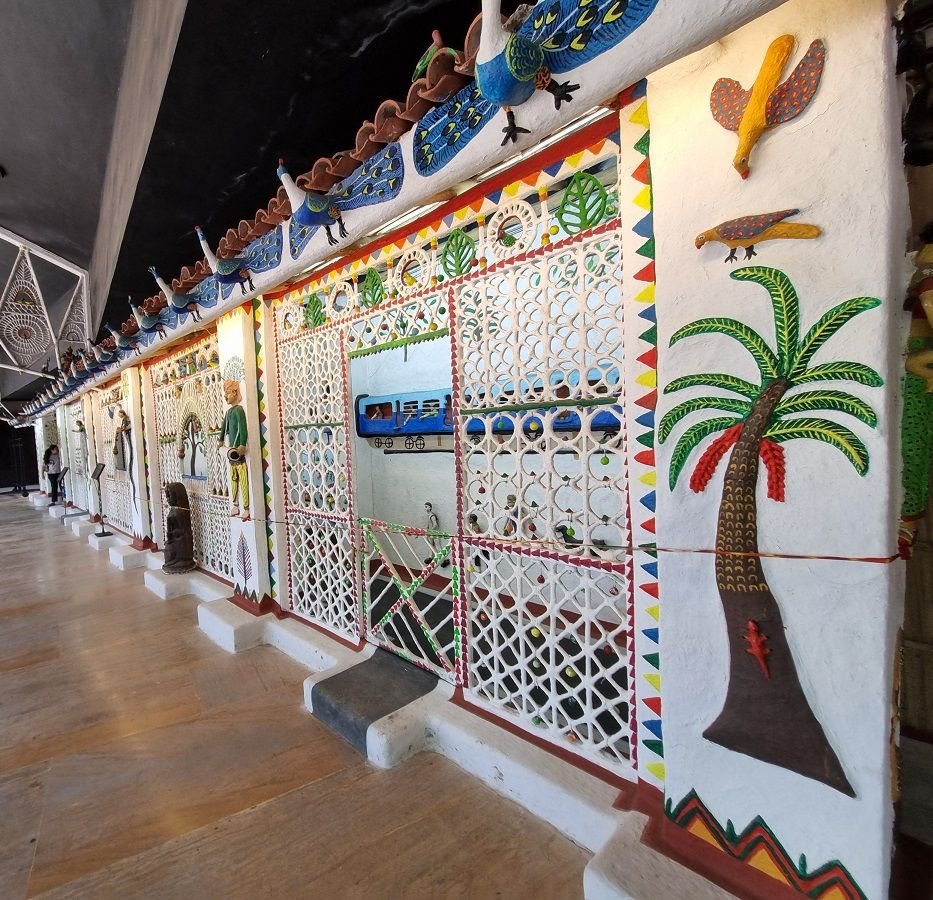
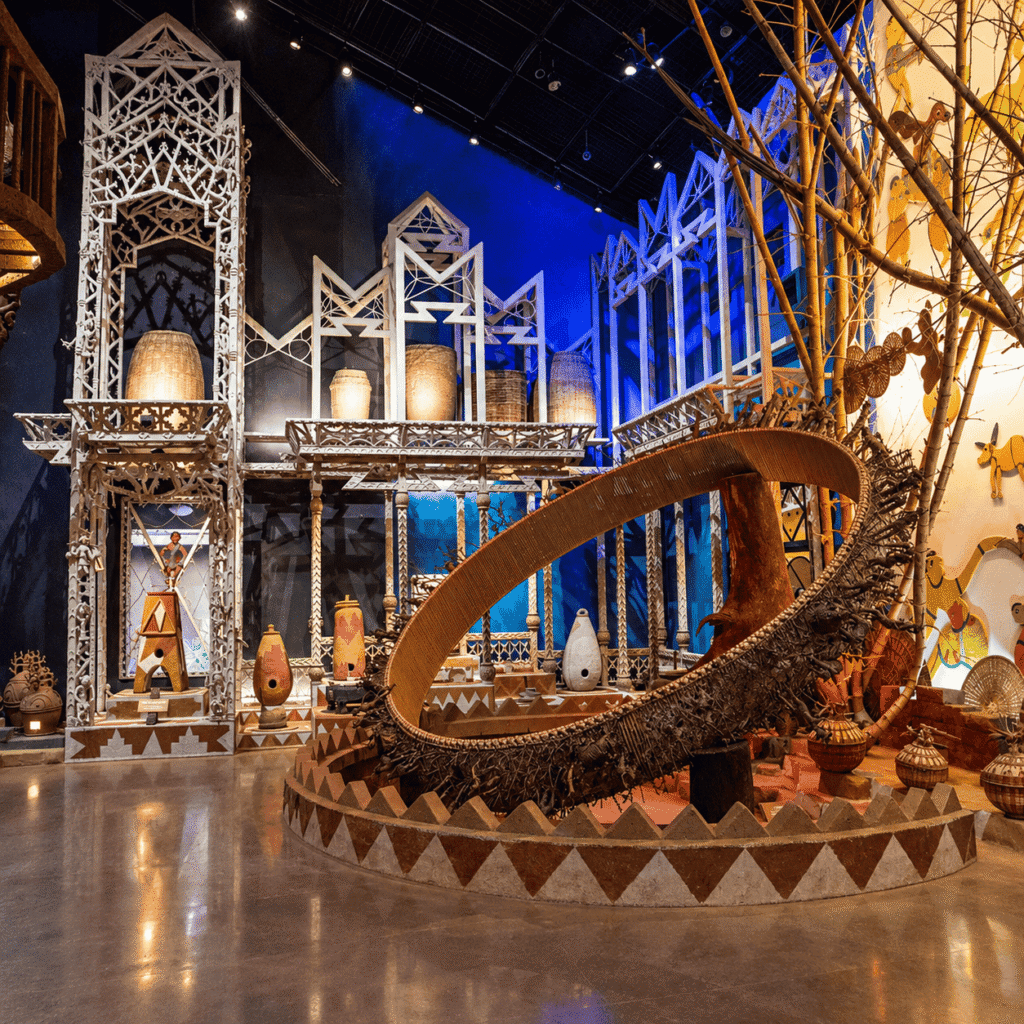
The Madhya Pradesh Tribal Museum, also called the Tribal Museum Bhopal, sits on Shyamla Hills, right beside the State Museum and near the Museum of Man (Indira Gandhi Rashtriya Manav Sangrahalaya). Inaugurated on 6 June 2013 by then-President Pranab Mukherjee, and designed by architect Revathi Kamath, the museum was created and dedicated to Madhya Pradesh’s tribal communities, who make up over 30% of the state’s population. Spread across roughly 7 acres, it is divided into six colourful galleries showcasing the diversity of the state’s seven major tribes the Bheel, Gond, Korku, Baiga, Sahariya, Bhariya and Kol — through full-scale models of tribal homes made of mud and bamboo, vivid installations, terracotta figures, and displays of rituals, worship, farming practices and spiritual life. Exhibits were created with direct input from tribal artists across the state, and the museum feels more like a living, immersive art experience than a traditional static display. Beyond the galleries, visitors can shop for tribal handicrafts at the ‘Chinhari’ boutique outlet, catch performances (plays, poetry, music, dance) at the amphitheatre, browse the museum’s in-house magazine, and grab a meal at the on-site restaurant. Bhopal has increasingly been called India’s “museum capital,” and this is widely considered one of its finest.
