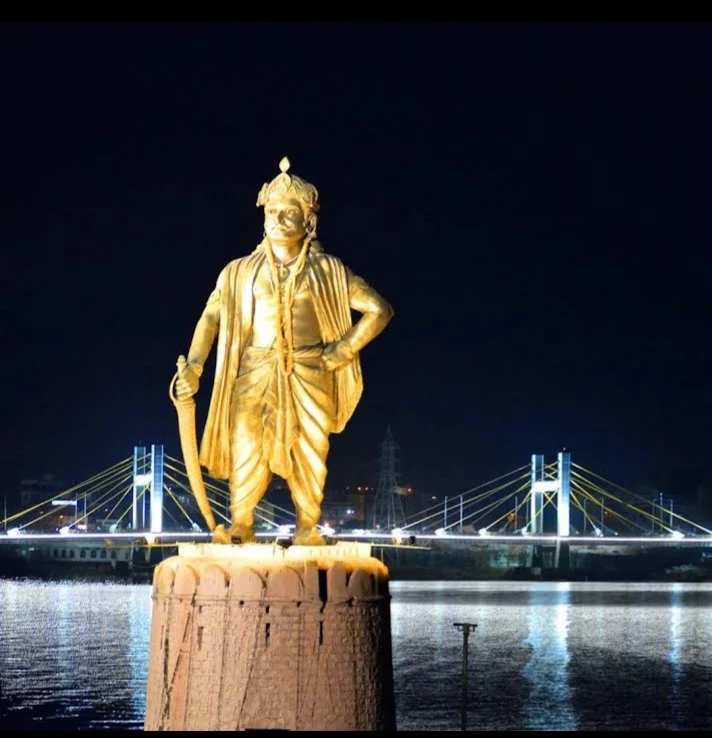

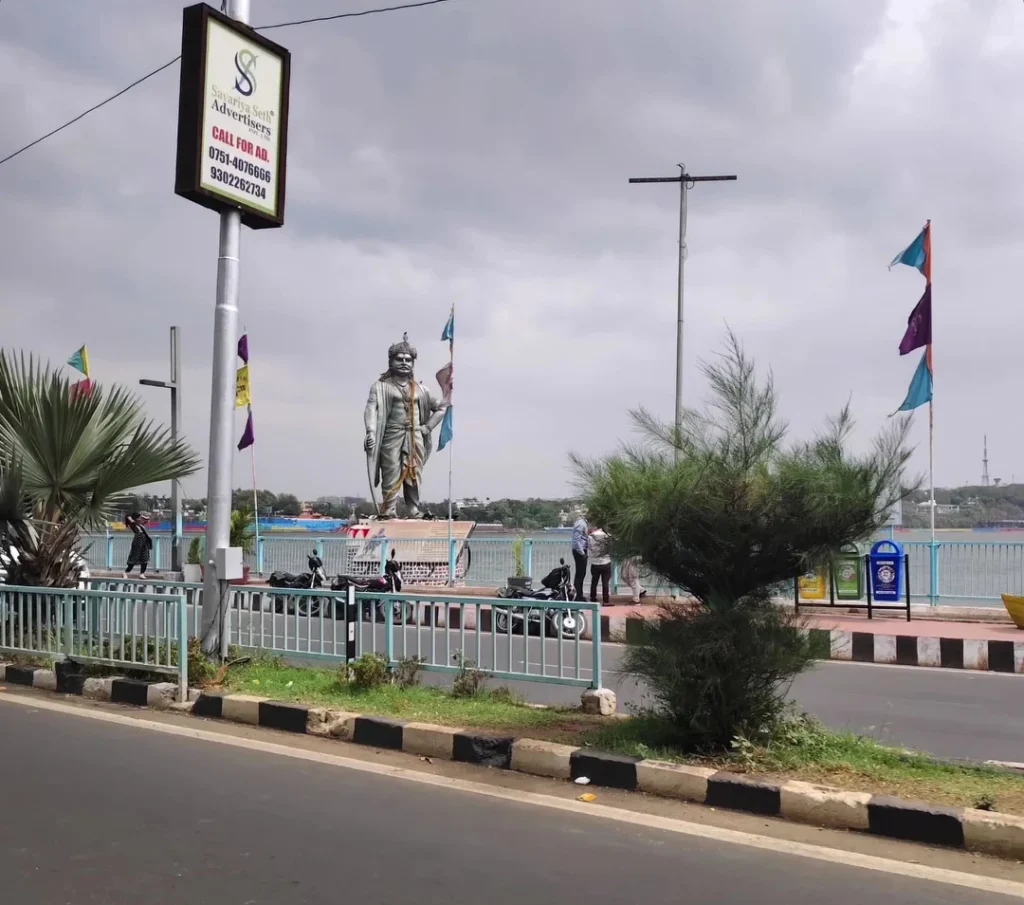
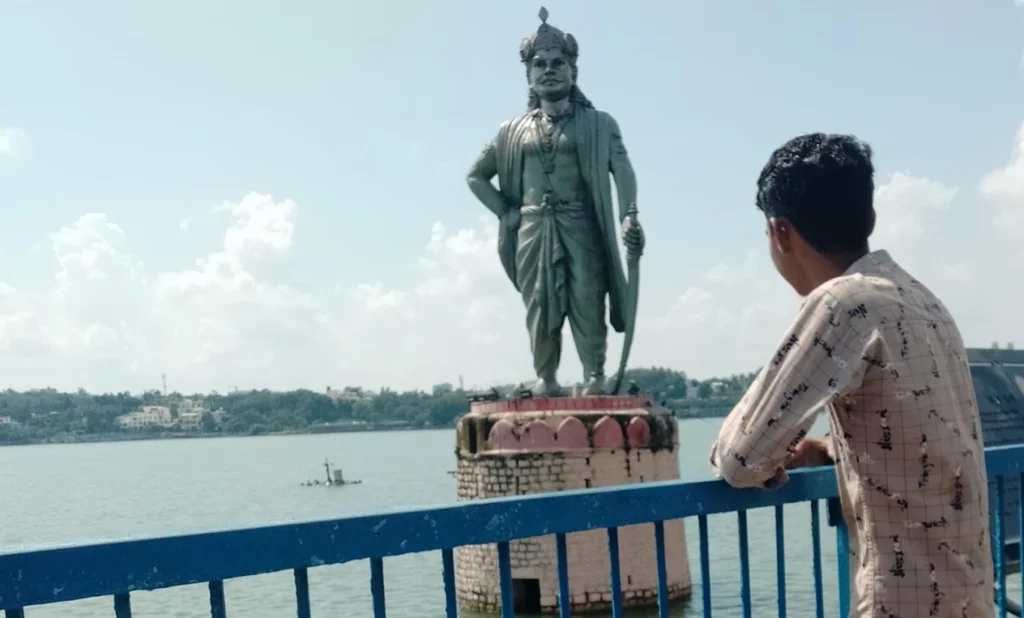
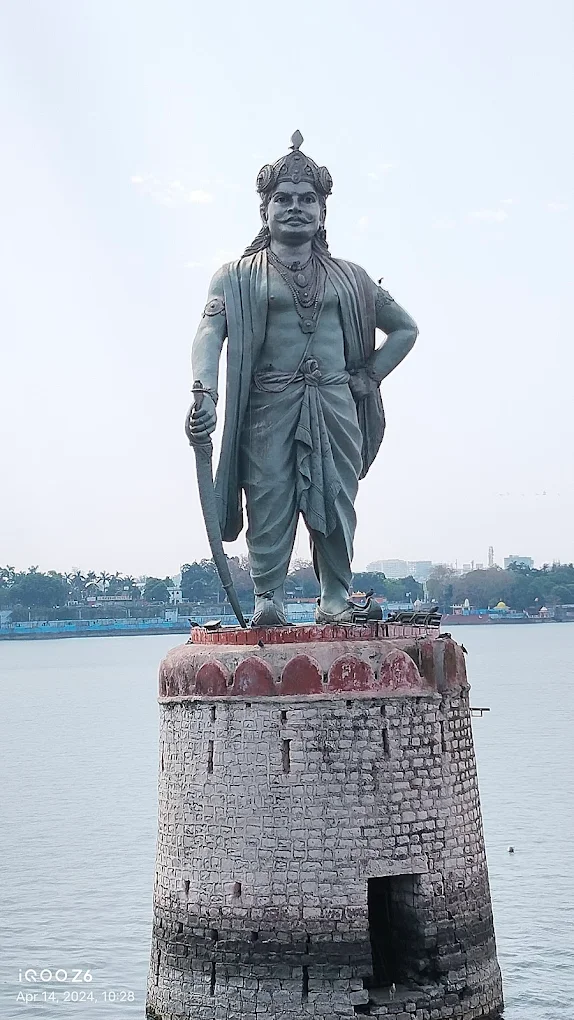
The Raja Bhoj Statue is a 32-foot-high monument on VIP Road, standing on a pillar at one corner of Bhopal’s Upper Lake (Bhojtal). It depicts Raja Bhoj, the 11th-century Paramara (Parmar) dynasty ruler who reigned from roughly 1010 to 1060 CE, standing with a sword. The statue was installed by the Madhya Pradesh government in 2011 to mark Raja Bhoj’s one-thousandth anniversary, and is said to be constructed from cannon and bell metal. Raja Bhoj is credited with engineering the very lake the statue overlooks, through an advanced dam system across the Kolans River — a feat of hydrological engineering for which the city’s Upper Lake was formally renamed Bhojtal in March 2011 in his honour. Beyond his military strength (he fought several wars to expand his realm across the Malwa region of central India), Raja Bhoj is remembered for his contributions to architecture, literature, education and water management, with his reign often described as a golden period of intellectual and infrastructural growth in central India. Bhopal’s own older name, Bhojpal, is popularly believed to derive from him. Today the statue is one of the city’s most recognisable landmarks and a favourite spot for lakeside photography, especially at sunrise, sunset, and via drone shots that capture its full scale against the water.
